Pippa Drummond is an academic, author, composer and professional musician. Gaining distinction (and becoming a silver medallist) in the Associated Board's final grade flute examination when she was eleven, Pippa went on to become the principal flautist of the National Youth Orchestra. She then studied music under Edmund Rubbra and Egon Wellesz at Oxford where she was awarded the MA, BMus and D.Phil degrees. While doing research she was appointed research fellow and director of music studies at St. Hugh's college, Oxford before becoming a lecturer in the music department at Sheffield University. After some years she resigned her lectureship to have a family and follow a professional flute-playing career. Subsequently she was appointed Head of Woodwind at Trent College, Nottingham before moving to Cornwall where she now lives. Pippa is the author of two books on music - The German Concerto: Five Eighteenth-Century Studies (Clarendon Press, Oxford, 1980) and The Provincial Music Festival in England 1784-1914 (Ashgate, 2011). She has also written several articles on music history and is a contributor to Grove's Dictionary of Music and Musicians. As a composer she has written choral music and works for voices and instruments, many of which have received their first performance in Cornwall. She was for many years principal flautist of the English Philharmonic orchestra with whom she performed professionally in all the major concert halls and theatres of England. She has also freelanced with numerous other orchestras and ensembles (including the English Symphony Orchestra and the English Pro Musica) and given solo recitals in London, Bristol, Bath and Sheffield. She has participated in broadcasts for the BBC and local radio stations and in concerts attended by royalty. In Cornwall she plays flute with a number of ensembles (including the Syrinx Trio) and is a member of the Heinichen ensemble in which she plays baroque flute.
Stephen Brown
‘cellist, composer, musical director
Stephen Brown was born in East Ham, London and learned the ‘cello at school with William Roskelly. He played the Haydn D Major Concerto with his local Youth Orchestra aged 17, and also studied the Walton concerto. In his teenage years he played with the London Junior Orchestra (conductor Bernard Keefe) at the Royal Academy of Music and also played and performed regularly with friends in a string quartet, in which he became acquainted with the great quartets of Shostakovich and Bartok, dabbled with the dodecaphony of Webern, and first tried his hand at composition. He was fortunate to have some conducting lessons from Sir Adrian Boult during these years. While studying medicine at King's College Cambridge he performed for David Willcocks' farewell and Philip Ledger’s inaugural concert. Later in London he composed, orchestrated & conducted music for pantomimes, shows and reviews. He also played in the London-based group Sinfonia Concertante, conducted by Clive Fairbairn, receiving favourable notices in the national press. In the 1980s he was a member of the Salomon Orchestra under various conductors including John Eliot Gardiner, Simon Rattle, Brian Wright and Nicholas Braithwaite, working with soloists that included Nigel Kennedy, Stephen Isserlis and Felicity Lott. The Salomon’s concerts at St. John’s Smith Square were regularly broadcast on the radio. Later he was to take part in a commercial recording accompanying Hinge & Bracket, and also made a CD with the Academy of St. Thomas in Norwich. He has lived in Cornwall since 2000 and professional musical engagements have included the British Philharmonic Concert Orchestra and work with Plymouth Philharmonic Choir, Truro Choral Society, New Devon Opera and Red Earth Opera and was Musical Director of Bodmin Musical Theatre Company from 2010-2016. Now retired from medical practice, his compositions include four string quartets, all written for the Corineus Quartet, and various chamber and orchestral works for voice mostly written for the singer Maria Heseltine. His setting of John Wesley’s Thou hidden source of calm repose was performed at Truro Cathedral in 2016, and the orchestral Two Sonnets by Rupert Brooke was first performed in Penzance in 2014. One of these, The Soldier was subsequently performed in Plymouth and Liskeard by international soprano Nadine Benjamin. 2018 saw the premiere of Fear no more the heat o’ the sun for mezzo-soprano and orchestra in Penzance with Maria Heseltine as soloist.He is currently working on a project celebrating the work of the Georgian poet Wilfred Gibson and his sister Elizabeth Gibson Cheyne. A selected composition portfolio is on YouTube
Pippa Drummond
Author, composer, performer
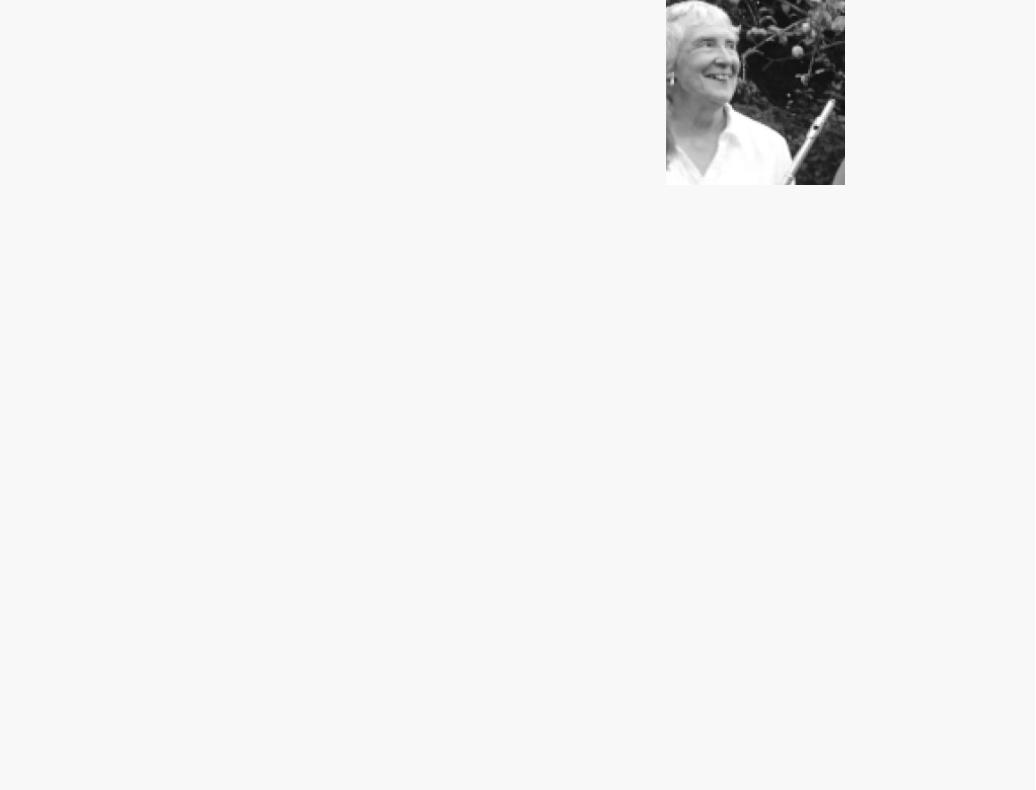
Pippa Drummond is an academic, author, composer and professional musician. Gaining distinction (and becoming a silver medallist) in the Associated Board's final grade flute examination when she was eleven, Pippa went on to become the principal flautist of the National Youth Orchestra. She then studied music under Edmund Rubbra and Egon Wellesz at Oxford where she was awarded the MA, BMus and D.Phil degrees. While doing research she was appointed research fellow and director of music studies at St. Hugh's college, Oxford before becoming a lecturer in the music department at Sheffield University. After some years she resigned her lectureship to have a family and follow a professional flute-playing career. Subsequently she was appointed Head of Woodwind at Trent College, Nottingham before moving to Cornwall where she now lives. Pippa is the author of two books on music - The German Concerto: Five Eighteenth-Century Studies (Clarendon Press, Oxford, 1980) and The Provincial Music Festival in England 1784-1914 (Ashgate, 2011). She has also written several articles on music history and is a contributor to Grove's Dictionary of Music and Musicians. As a composer she has written choral music and works for voices and instruments, many of which have received their first performance in Cornwall. She was for many years principal flautist of the English Philharmonic orchestra with whom she performed professionally in all the major concert halls and theatres of England. She has also freelanced with numerous other orchestras and ensembles (including the English Symphony Orchestra and the English Pro Musica) and given solo recitals in London, Bristol, Bath and Sheffield. She has participated in broadcasts for the BBC and local radio stations and in concerts attended by royalty. In Cornwall she plays flute with a number of ensembles (including the Syrinx Trio) and is a member of the Heinichen ensemble in which she plays baroque flute.
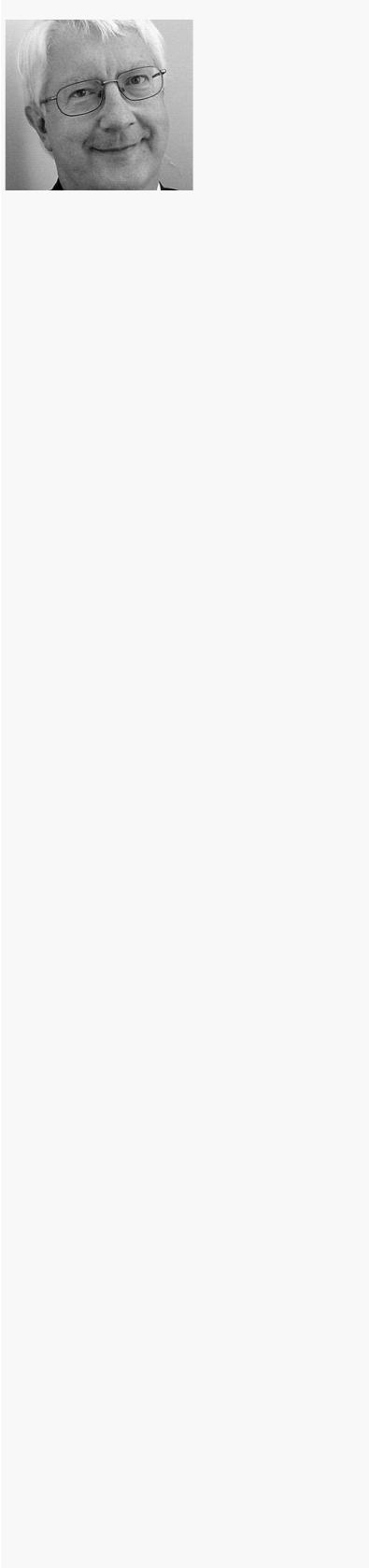
Stephen Brown was born in East Ham, London and learned the ‘cello at school with William Roskelly. He played the Haydn D Major Concerto with his local Youth Orchestra aged 17, and also studied the Walton concerto. In his teenage years he played with the London Junior Orchestra (conductor Bernard Keefe) at the Royal Academy of Music and also played and performed regularly with friends in a string quartet, in which he became acquainted with the great quartets of Shostakovich and Bartok, dabbled with the dodecaphony of Webern, and first tried his hand at composition. He was fortunate to have some conducting lessons from Sir Adrian Boult during these years. While studying medicine at King's College Cambridge he performed for David Willcocks' farewell and Philip Ledger’s inaugural concert. Later in London he composed, orchestrated & conducted music for pantomimes, shows and reviews. He also played in the London-based group Sinfonia Concertante, conducted by Clive Fairbairn, receiving favourable notices in the national press. In the 1980s he was a member of the Salomon Orchestra under various conductors including John Eliot Gardiner, Simon Rattle, Brian Wright and Nicholas Braithwaite, working with soloists that included Nigel Kennedy, Stephen Isserlis and Felicity Lott. The Salomon’s concerts at St. John’s Smith Square were regularly broadcast on the radio. Later he was to take part in a commercial recording accompanying Hinge & Bracket, and also made a CD with the Academy of St. Thomas in Norwich. He has lived in Cornwall since 2000 and professional musical engagements have included the British Philharmonic Concert Orchestra and work with Plymouth Philharmonic Choir, Truro Choral Society, New Devon Opera and Red Earth Opera and was Musical Director of Bodmin Musical Theatre Company from 2010-2016. Now retired from medical practice, his compositions include four string quartets, all written for the Corineus Quartet, and various chamber and orchestral works for voice mostly written for the singer Maria Heseltine. His setting of John Wesley’s Thou hidden source of calm repose was performed at Truro Cathedral in 2016, and the orchestral Two Sonnets by Rupert Brooke was first performed in Penzance in 2014. One of these, The Soldier was subsequently performed in Plymouth and Liskeard by international soprano Nadine Benjamin. 2018 saw the premiere of Fear no more the heat o’ the sun for mezzo-soprano and orchestra in Penzance with Maria Heseltine as soloist.He is currently working on a project celebrating the work of the Georgian poet Wilfred Gibson and his sister Elizabeth Gibson Cheyne. A selected composition portfolio is on YouTube: